Research

One main research interest is how strong electromagnetic fields modify fundamental processes. Primarily I’m interested in electromagnetic fields that can be produced terrestrially by intense laser pulses, which is sometimes referred to as laser-particle physics. But these fields might also be found around strongly magnetised neutron stars or in the inter-atomic Coulomb field of oriented crystals. It’s not only quantum electrodynamics where strong electromagnetic fields are important: my work also covers some areas of Beyond the Standard Model Physics as well as electroweak physics.

I find projects most interesting when they have some connection to experiment. The maximum attainable field strengths that can be produced in the lab continues to increase with the newest generation of high power laser facilities, offering a great opportunity to test our understanding of how strong electromagnetic fields can be used to manipulate fundamental processes.

Below are some recent projects I have been working on with collaborators. (Pre-print arXiv versions can be found on my Google Scholar / INSPIRE profiles.)

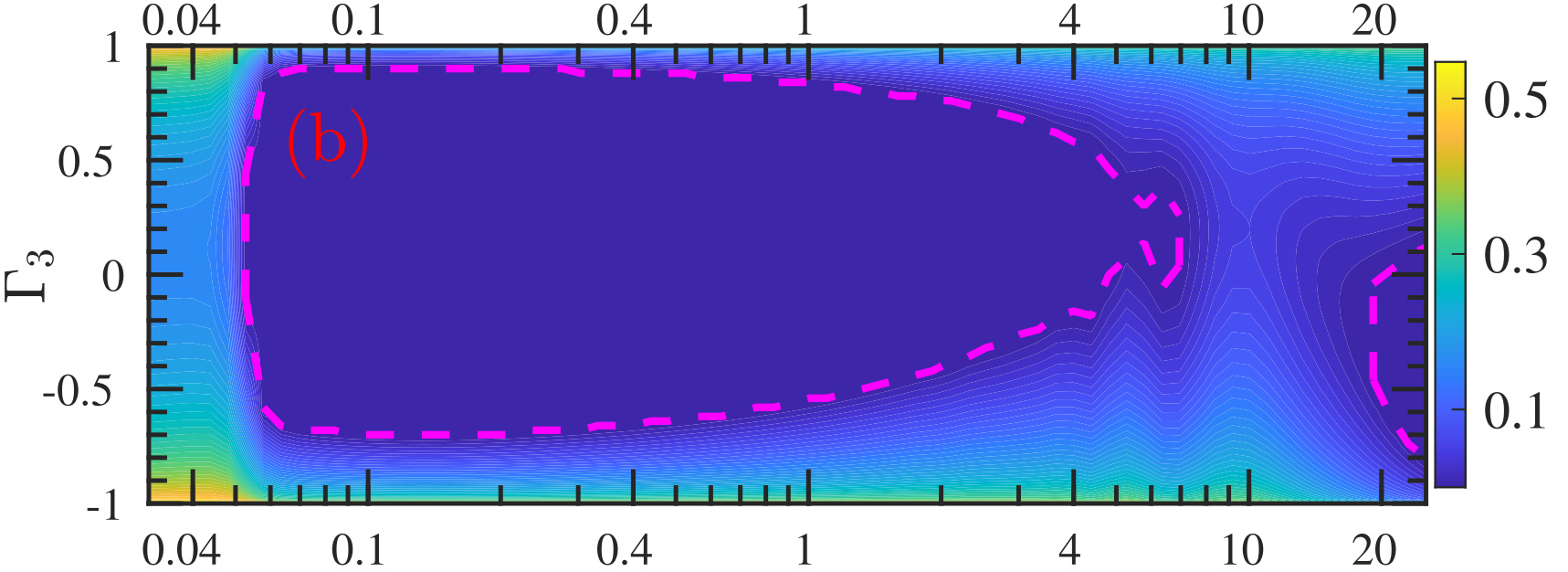
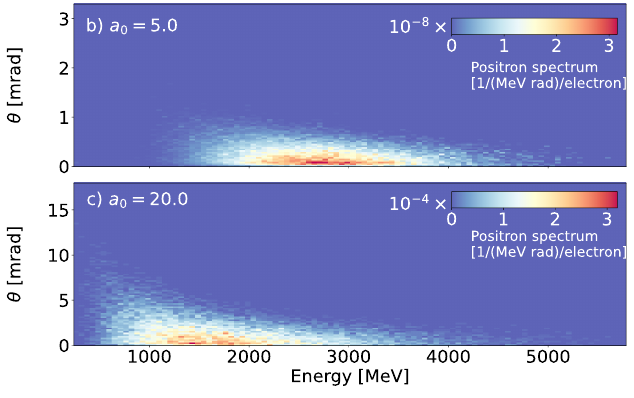
Signals of higher-order nonlinear showers in particle-laser collisions

Signals of higher-order nonlinear showers in particle-laser collisions

We propose a way to experimentally test the limits of current strong-field QED theory. Higher-order quantum processes can produce distinctive asymmetries in the spectra of particles emerging from nonlinear QED showers, providing an experimentally accessible signature of physics beyond the leading-order description.
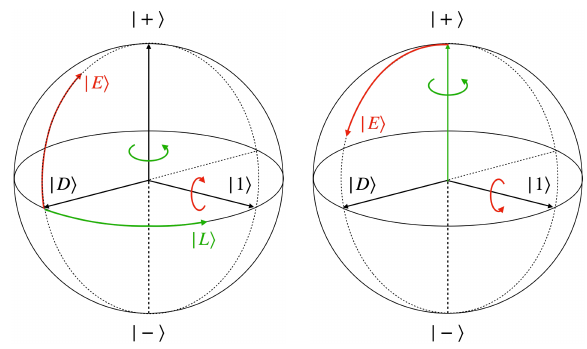
The quantum vacuum as a chiral medium

The quantum vacuum as a chiral medium

Can the quantum vacuum behave like a chiral optical medium? We show that a circularly polarised electromagnetic field can give the vacuum a definite handedness, causing linearly polarised light to undergo circular birefringence. The effect reveals physics beyond the standard Heisenberg–Euler description of the vacuum, and we identify laser-field configurations in which these corrections could be tested experimentally.

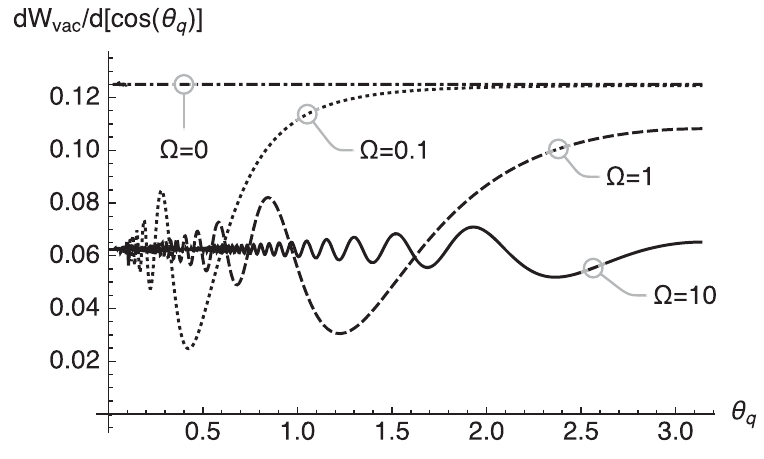
Laser-modified muon decay

Laser-modified muon decay

A laser pulse can influence the decay of a muon outside the laser field through quantum interference. The resulting effect can increase the muon lifetime by up to a factor of two and is potentially observable with laser parameters available today.

Spin-entangled electron and positron pairs

Spin-entangled electron and positron pairs

Intense laser pulses can produce electron–positron pairs with strongly entangled spins. We show that the degree of entanglement can be controlled through the photon and laser parameters, and that strongly entangled pairs could be generated using technology available today.